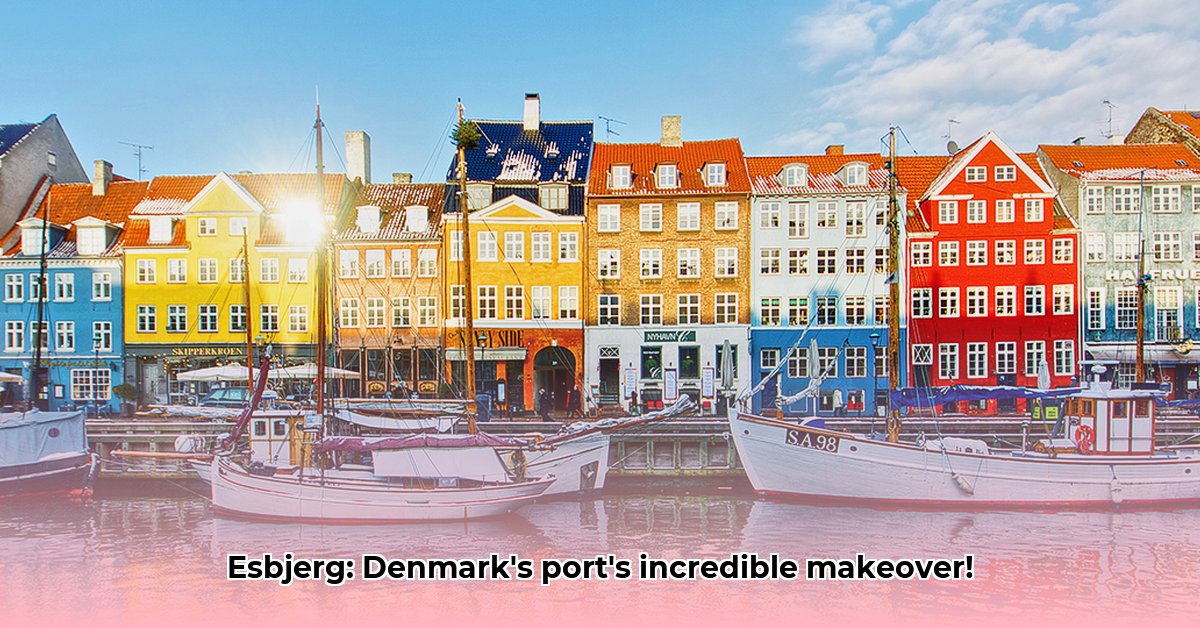
Denmark's Biggest Port: Esbjerg's Unexpected Journey from Fishing Hamlet to Offshore Powerhouse
Esbjerg’s story is a jol, a real cracker – showing how a small town can reinvent itself. Imagine: a humble fishing village, suddenly a major player. That’s Esbjerg, after Denmark lost Altona in 1864. This loss, harsh as it sounds, ironically paved the way for Esbjerg’s growth. Its coastal location became incredibly valuable, a hidden gem waiting to be discovered. The railway’s arrival in 1874 was the kersklap, connecting Esbjerg to Denmark and attracting businesses. This wasn’t just survival; it was a spectacular rise. Isn't it remarkable how adversity can sometimes forge the path to success?
From Nets to North Sea Giants: The Offshore Energy Revolution
Then came the offshore energy boom – a complete game-changer. Esbjerg became a key player in the North Sea’s energy scene. The harbour expanded, new infrastructure bloomed – it wasn’t just bigger docks; it was a brand-new identity. But with this success came serious questions about the future. How could such rapid growth be sustained, and what risks were involved?
Riding the Waves: Navigating Challenges and Opportunities
Esbjerg’s success is worth celebrating, but let's be regtig (honest) – there are challenges. Over-reliance on one industry is risky. What if the offshore energy market slows down? Diversification is key. Tourism seems natural, given Esbjerg’s location. There's also the potential of technology and renewable energy. The question is: how can Esbjerg fully use these opportunities and build a lasting future? This requires careful planning and a clear strategic vision to ensure long-term prosperity.
A Blueprint for Success: Actionable Steps for Sustainable Growth
The path ahead requires collaboration. Here’s what each stakeholder needs to do:
1. City Government:
- Short-term (0-1 year): Assess the social and environmental impact of offshore energy. Invest in tourism infrastructure (hotels, signage, visitor centres). Attract tech companies with incentives.
- Long-term (3-5 years): Implement a sustainability plan. Forge international partnerships to attract investment.
2. Offshore Energy Firms:
- Short-term (0-1 year): Improve logistics and supply chains, invest in training programs for a skilled workforce.
- Long-term (3-5 years): Integrate renewable energy solutions, adopt automation technologies.
3. Local Communities:
- Short-term (0-1 year): Promote local businesses and tourism through events. Upgrade community facilities to enhance quality of life.
- Long-term (3-5 years): Participate in urban planning, ensure an equitable distribution of economic benefits.
4. Regional Government:
- Short-term (0-1 year): Improve transport links, invest in education and training programs.
- Long-term (3-5 years): Develop regional diversification strategies, foster collaboration between municipalities.
Charting a Course Through Uncertainty: A Realistic Risk Assessment
Over-reliance on offshore energy is a real risk. Here's a risk assessment, showing probabilities and impacts, along with mitigation strategies:
| Risk Factor | Probability | Impact | Mitigation Strategies |
|---|---|---|---|
| Dependence on Offshore Energy | High | High | Diversify the economy; invest in renewable energy; attract other industries. |
| Environmental Degradation | Medium | Medium | Implement strict regulations; invest in monitoring and research; promote sustainable practices. |
| Social Inequality | Medium | Medium | Promote inclusion; invest in community initiatives; ensure fair distribution of economic gains. |
| Global Economic Downturn | Medium | High | Build strong financial reserves; attract diverse investment; develop adaptable business models. |
| Skills Gaps in Workforce | Medium | Medium | Invest in education and training; collaborate with educational institutions; support ongoing professional development. |
| Competition from other Ports | Low | Medium | Continuously upgrade port infrastructure; improve efficiency; aggressively market services. |
How Did Esbjerg Mitigate the Social Impacts of Rapid Industrialization?
Esbjerg’s journey shows the importance of foresight, planning, and adaptability. It's a compelling case study demonstrating the transformative power of strategic planning and infrastructural development in mitigating potentially negative social consequences. The story highlights the remarkable ability of a community to adapt and thrive in the face of rapid and dramatic economic shifts. This valuable insight is applicable to other coastal communities facing similar transformations.
Key Takeaways:
- Esbjerg's growth involved significant social change.
- Strategic planning and infrastructure development were crucial.
- While the city experienced economic expansion, challenges remain in diversification.
- Esbjerg's story offers valuable lessons for other coastal communities.
Esbjerg's transformation from a fishing village to a major port presents a compelling narrative of both remarkable success and ongoing challenges. The city's innovative trajectory offers practical insights into the effective management of rapid urban growth, emphasizing the significance of proactive planning and collaborative strategies for long-term sustainability. The lessons learned in Esbjerg’s journey are invaluable for other coastal cities undergoing similar transformations.